
Foundation consolidation of Gilău Castle, Cluj Foundation consolidation of Gilău Castle, Cluj
Foundation consolidation
Foundation consolidation
of Gilău Castle, Cluj
tehnologii de injectare cu rasini
The buildings of Gilău Castle were built in the 15th-17th centuries, and in the 19th century several modifications and additions took place. In 1911 a new wing was added, with the foundation placed in the outer ditch of the old castle. In the area of the joint between the old building and the one added in 1911, cracks and fissures appeared due to the subsidence of the ground under the added construction.
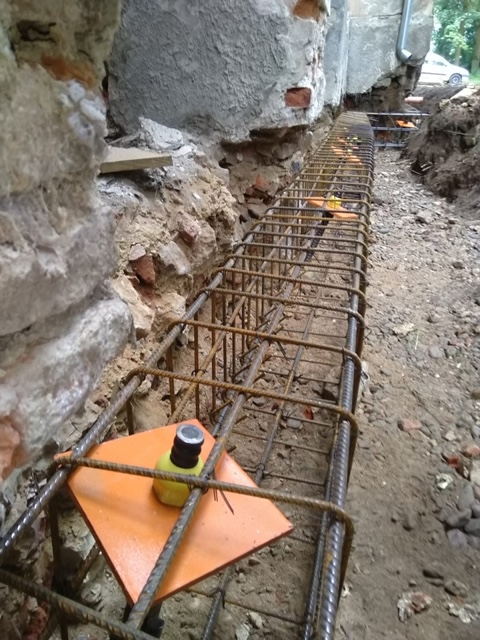
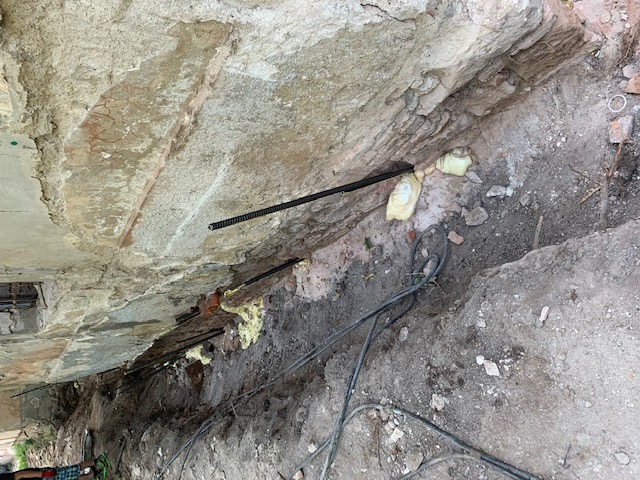
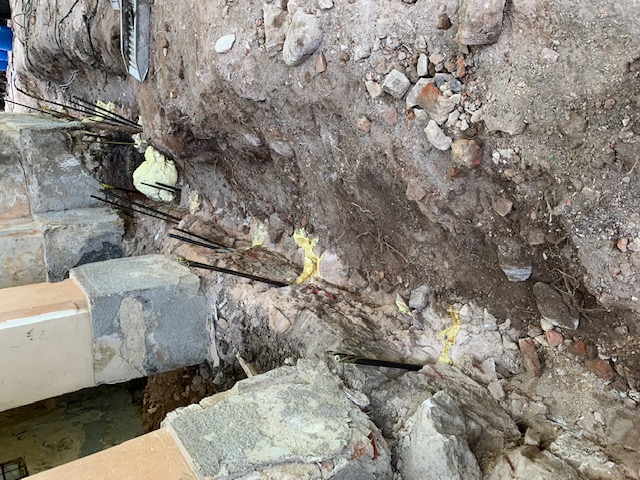
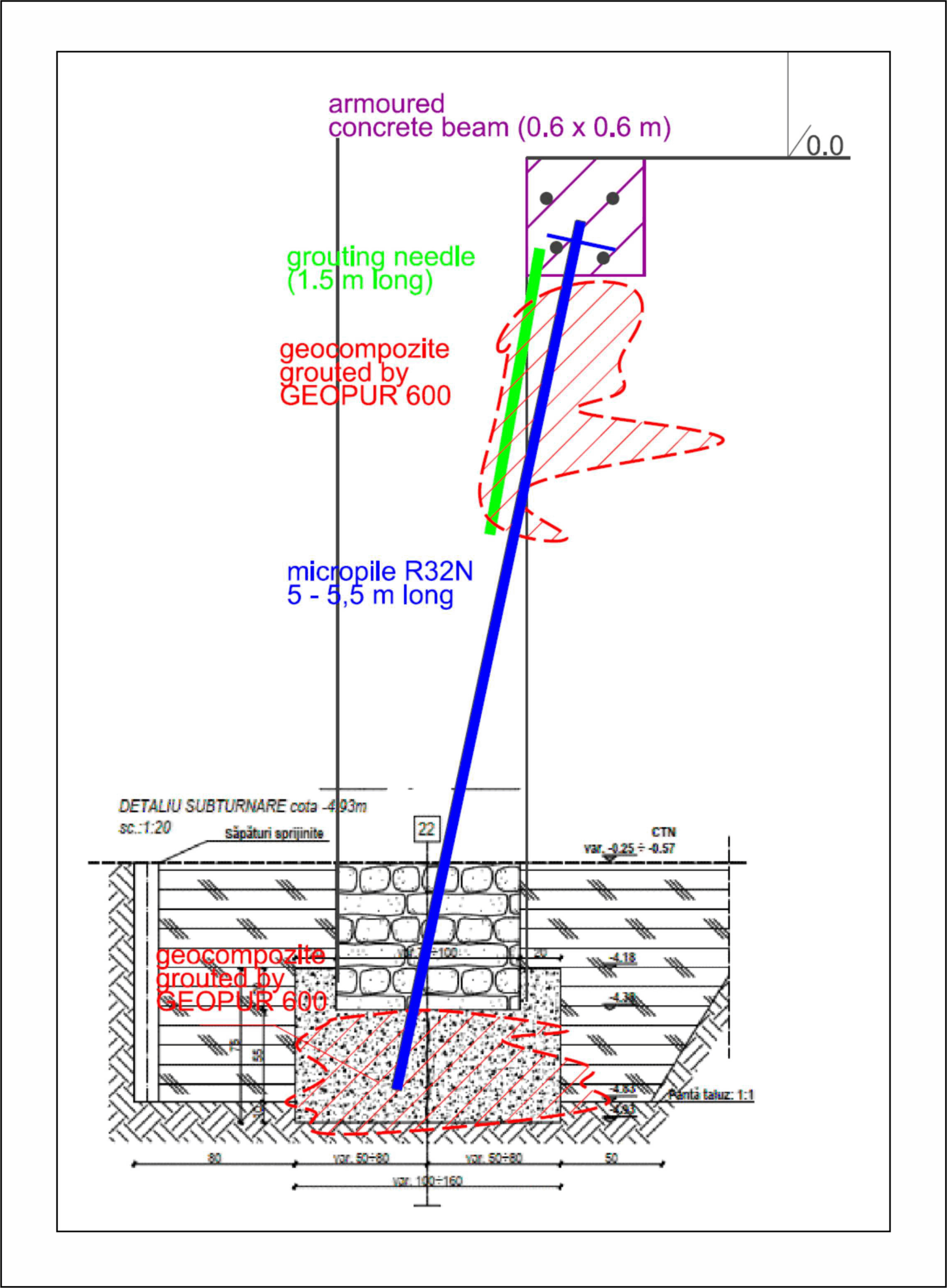
The consolidation of the foundation ground was carried out with micropiles introduced through the body of the foundation down to the -5.5m elevation, through which the Geopur bicomponent polyurethane resin was injected.
In the rehabilitation of historical monuments, the injection solution presents a series of significant advantages:
– Minimally invasive: Significantly reduces the need for major interventions on the structure of the monument, thus preserving its historical appearance.
– Adaptability: Polyurethane foam adapts to various shapes and sizes of gaps, ensuring uniform consolidation.
– Process control: Injection is done under control, allowing the amount of injected material to be adjusted according to needs.
– Durability: Polyurethane foam is resistant to water and degradation, ensuring long-term consolidation.
– Short execution time: Compared to traditional methods, polyurethane foam injection is performed in a shorter time.
Specific applications in the consolidation of historical monuments:
– Foundation consolidation
– Masonry consolidation
– Protection against water infiltration
Design Sketch:
The buildings of Gilău Castle were built in the 15th-17th centuries, and in the 19th century several modifications and additions took place. In 1911 a new wing was added, with the foundation placed in the outer ditch of the old castle. In the area of the joint between the old building and the one added in 1911, cracks and fissures appeared due to the subsidence of the ground under the added construction.
The consolidation of the foundation ground was carried out with micropiles introduced through the body of the foundation down to the -5.5m elevation, through which the Geopur bicomponent polyurethane resin was injected.
In the rehabilitation of historical monuments, the injection solution presents a series of significant advantages:
– Minimally invasive: Significantly reduces the need for major interventions on the structure of the monument, thus preserving its historical appearance.
– Adaptability: Polyurethane foam adapts to various shapes and sizes of gaps, ensuring uniform consolidation.
– Process control: Injection is done under control, allowing the amount of injected material to be adjusted according to needs.
– Durability: Polyurethane foam is resistant to water and degradation, ensuring long-term consolidation.
– Short execution time: Compared to traditional methods, polyurethane foam injection is performed in a shorter time.
Specific applications in the consolidation of historical monuments:
– Foundation consolidation
– Masonry consolidation
– Protection against water infiltration